Relocating to St. Petersburg FL: Find Your Best Area
May 21, 2026
May 21, 2026
Choosing an area in St. Petersburg can feel harder than choosing a home. The city covers a lot of ground, the shoreline changes the lifestyle from one pocket to the next, and your day-to-day routine can look very different depending on where you land. If you are relocating and want a smarter way to narrow your options, this guide will help you compare St. Pete areas based on commute, housing style, budget, and lifestyle. Let’s dive in.
Before you fall in love with a listing, get clear on how St. Petersburg is laid out. The city spans about 60 square miles and has roughly 244 miles of shoreline, so location choices can shape everything from traffic patterns to insurance costs to how often you use your car.
A practical first step is to think in broad geographic sections. St. Petersburg’s police service areas are divided into three districts: District 1 in South St. Petersburg, District 2 in North and Northeast St. Petersburg, and District 3 in West St. Petersburg. That does not tell you everything about a neighborhood, but it can help you organize your search before you compare specific blocks or communities.
Relocation decisions usually get easier when you start with your real life. Think about where you work, how often you need to commute, whether you want walkable surroundings, and how much driving you are comfortable with each week.
If you commute toward Tampa, access to I-275 and the Howard Frankland Bridge should be part of your first screen. The Florida Department of Transportation says the new Howard Frankland Bridge opened to traffic in March 2025, increased capacity by 50 percent, and serves about 200,000 daily travelers in the Tampa Bay and St. Petersburg area. That makes bridge access a major factor when comparing neighborhoods.
FDOT also shows direct I-275 connections to routes like Gandy Boulevard, Roosevelt Boulevard and Gateway Expressway, 4th Street North, and Kennedy Boulevard. In real terms, that means two homes with the same St. Petersburg address label can produce very different commute experiences depending on which roads you use most.
If you want to rely less on your car, downtown St. Petersburg deserves a close look. The downtown transportation guide describes the area as pedestrian-friendly, with the Downtown Looper trolley, the Central Avenue trolley, and PSTA bus service. The Looper runs every 15 to 20 minutes, seven days a week.
The SunRunner is another useful option if beach access matters to you. PSTA says it uses dedicated lanes, runs every 15 minutes, and connects St. Pete Beach to downtown St. Petersburg in about 35 minutes. The Pinellas Trail also adds flexibility if you value biking, walking, or recreation with broader county access.
One of the fastest ways to choose an area is to compare neighborhood types instead of trying to learn the whole city at once. In St. Petersburg, most relocating buyers start to narrow their search by asking what kind of setting feels right for their lifestyle.
If water access is high on your list, start by comparing a few different waterfront options rather than assuming they all offer the same experience. Snell Isle is set along Coffee Pot Bayou, Smacks Bayou, and Tampa Bay, and it is closely associated with walking paths, parks, and harbor access. Bayway Isles is made up of two islands extending from the Pinellas Bayway causeway to Boca Ciega Bay, with an emphasis on open water, views, and water-oriented living.
These areas can be great reference points if you want boating access, a quieter near-water setting, or a strong connection to the bay. At the same time, waterfront living should always be evaluated with long-term ownership costs in mind, not just scenery.
If you want a more urban lifestyle, downtown St. Petersburg offers one of the clearest starting points. It is described as a district with office high-rises, museums, arts venues, waterfront parks, and dining along Central Avenue and Beach Drive. It also stands out for walkability, trolley access, and substantial public parking.
Just west of downtown, the Grand Central District offers another urban option. It is described as a lively area with galleries, restaurants, bars, boutique shops, and some quieter residential pockets nearby. If you are looking for low-maintenance living with easy access to dining, arts, and entertainment, this part of the city often makes an early shortlist.
If architectural character matters to you, St. Petersburg has several neighborhoods that stand out for historic housing and older street patterns. Historic Old Northeast sits next to downtown and includes nearly 3,000 historic buildings, with Mediterranean and bungalow styles, brick streets, granite curbs, and bus service through the neighborhood.
Historic Roser Park offers a different historic setting. Its neighborhood history describes it as the first residential subdivision outside the downtown business district, with Mediterranean, Spanish, and other historic home styles around Booker Creek. Historic Kenwood is also well known for bungalows, green space, brick streets, and an active arts presence.
These areas can be especially appealing if you want a home with personality and a strong sense of place. They may also require a different mindset than newer construction, since older homes can bring a different maintenance profile and lot configuration.
If you want a more residential feel, inland neighborhoods may fit better than downtown or bayfront addresses. The city’s zoning pattern reflects a mix of denser downtown-centered districts and lower-density neighborhood suburban single-family districts, which is useful when you are deciding how much activity you want around you.
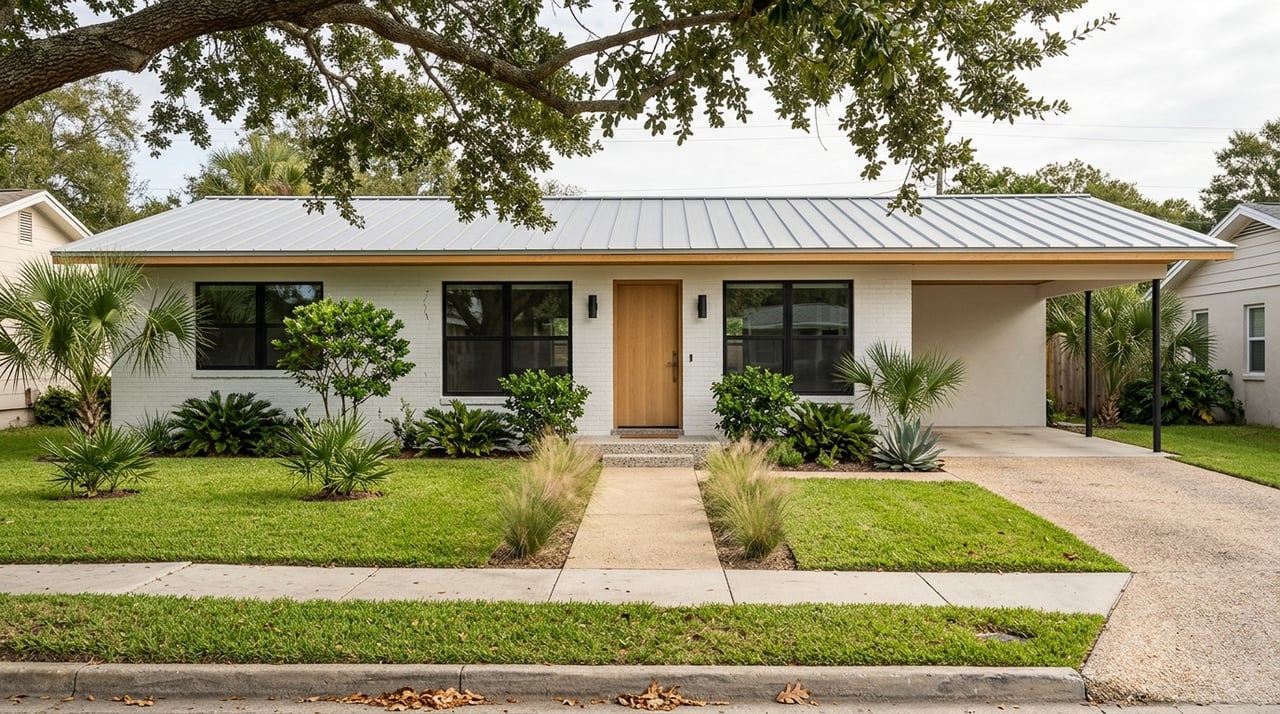
Central Oak Park is one example often worth considering. It is described as primarily single-family homes with a mix of bungalows, ranch homes, and some modern structures, and it sits on the Central Avenue trolley line. It is also noted as one of the city’s higher-elevation areas.
Other inland neighborhoods that often come up in relocation searches include Disston Heights, Jungle Terrace, Azalea, Meadowlawn, and Lakewood Estates. Broadly speaking, buyers often consider these areas when they want a more neighborhood-oriented setting and some separation from the downtown core or waterfront environment.
In St. Petersburg, flood risk should be part of your area search from day one. Pinellas County says everyone in the county is in a flood zone, and it also notes that flood zones, evacuation zones, and storm surge maps measure different risks. Those are not interchangeable labels, so it is important to review each one when comparing homes.
This matters for both peace of mind and monthly cost. Pinellas County notes that flood insurance is separate from most homeowners coverage, and homes in high-risk A or V zones can trigger flood-insurance requirements on federally backed mortgages. FEMA also states that the Flood Map Service Center is the official public source for flood-hazard information and that flood risk can change over time.
For many relocating buyers, this is the point where an attractive waterfront or near-water home starts to look different on paper. A home’s area may fit your lifestyle perfectly, but the full cost of ownership should include insurance and exposure considerations.
If you are feeling overwhelmed, use four filters to simplify the process. This gives you a practical way to compare areas without getting stuck in endless online browsing.
Look beyond the purchase price. In St. Petersburg, budget should include flood exposure, possible flood-insurance requirements, and the difference in long-term costs between inland and waterfront locations.
Test the route you expect to use most. If your job is in Tampa or along the I-275 corridor, focus on bridge access, key interchanges, and how traffic feels during the times you would actually travel.
Think honestly about how you want to live. Downtown and Grand Central fit buyers who want dining, arts, and a more urban feel, while waterfront neighborhoods like Snell Isle and Bayway Isles may fit buyers who prioritize water access and a quieter setting. Historic neighborhoods offer architectural character, and inland residential areas may offer a more traditional neighborhood feel.
If school assignment is part of your move, check it early. Pinellas County Schools says its School Zone Locator allows you to enter a home address to find the assigned school zone, and the district notes that magnet and fundamental programs are layered on top of zoned schools. That means school research should happen before you get too attached to one area.
A helpful relocation strategy is to compare one area from each major category instead of trying to evaluate every neighborhood at once. Create a simple scorecard with four columns: commute, housing type, budget, and lifestyle.
Then test one waterfront area, one downtown or adjacent urban area, one historic neighborhood, and one inland residential option. Visit each during the day, at night, and during rush hour. That side-by-side approach usually makes your priorities much clearer.
Here is a simple way to structure your first round of research:
You do not need to pick the perfect neighborhood on day one. You just need a smart comparison set that helps you see what fits your routine, budget, and lifestyle best.
If you are relocating from out of state or buying from a distance, this kind of structured search can save time and reduce second-guessing. A guided, neighborhood-first strategy often leads to better decisions than searching by square footage alone.
When you are ready to narrow St. Petersburg into a shortlist that actually matches how you want to live, working with a local guide can make the process much more efficient. For personalized relocation help, area comparisons, and hands-on support from search to closing, connect with Hilary OBrien.
Stay up to date on the latest real estate trends.

Whether you’re buying, selling, or exploring your options, I’m here to help you move forward with confidence.